




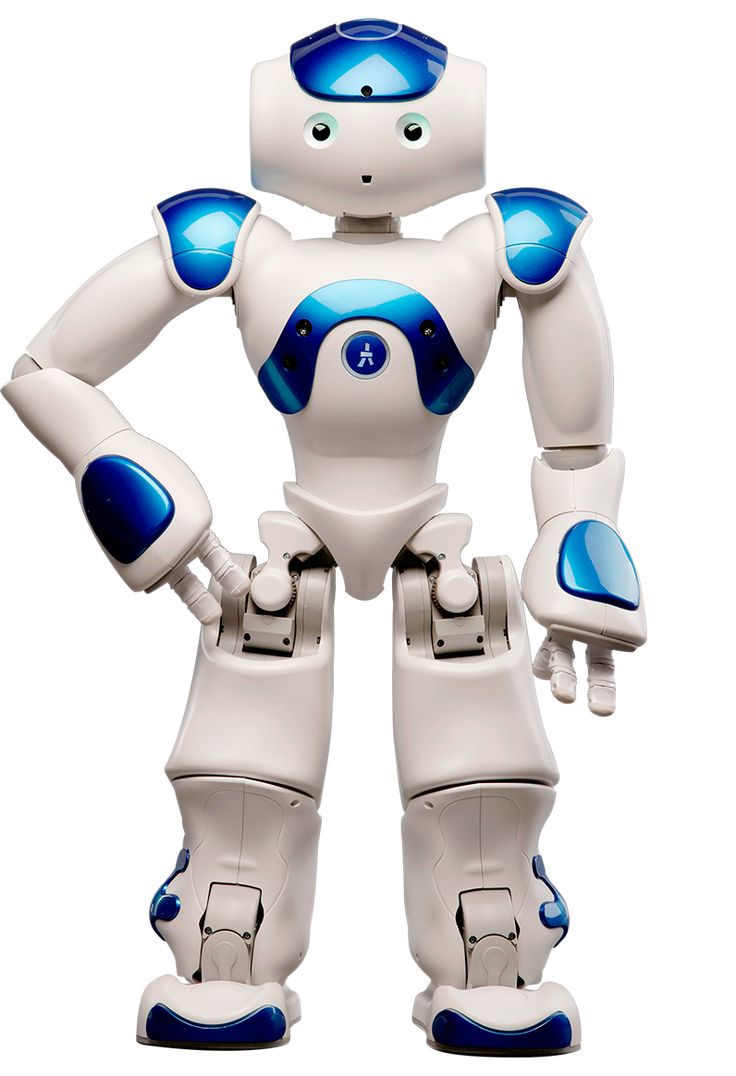
*Robotec.ai, Liquid AI, and AMD demonstrate agentic AI in a dynamic warehouse. Source: Robotec.ai
Imagine a warehouse where robots not only execute commands, but take the initiative: one decides to avoid a sudden obstacle, the other redistributes tasks between "colleagues", and the third warns of a possible system failure. This is not a fantasy movie scenario — this is the reality that Robotec AI is creating together with AMD and Liquid AI, using agent-based artificial intelligence in warehouse robotics. It turns out that the future of automation lies not in making robots more docile, but in endowing them with intelligence and the ability to act independently.
*What is agent-based AI and why does it change the rules of the game?
Until now, most industrial robots have worked on the "condition-action" principle: if the sensor sees an obstacle, stop, if a command is received, execute. Agent—based AI is a fundamentally different approach. Such systems do not just react to the environment, but are able to set goals, plan their actions and make decisions in conditions of uncertainty.
"We are not just creating automated systems, but digital employees who can adapt to changes without constant human intervention," RoboTec AI explains.
Imagine the difference between a radio-controlled car and an autonomous taxi. The first one does only what she is told, the second one sets her own route, avoids traffic jams and reacts to the traffic situation. This is exactly the level of autonomy warehouse robots will receive.
How does this work in practice? Examples from the warehouse life
Adaptive routing
An ordinary robot, encountering water spilled on the floor, will stop and wait for help. A robot with agent-based AI will assess the situation, find a detour on its own and report the incident to the system so that it can call a cleaner.
Collective optimization
When an urgent large order arrives at the warehouse, robots with agent-based AI can independently redistribute tasks: some of the machines switch to assembling this order, while the rest compensate for their absence during normal operations.
Predictive maintenance
Such a robot can analyze its own indicators — engine vibration, bearing temperature — and predict the need for maintenance before a critical situation occurs.
Technological magic under the hood
The collaboration of RoboTec AI, AMD and Liquid AI creates a unique symbiosis:
AMD computing power provides real-time data processing directly on the robot
Liquid AI neural network algorithms allow robots to learn from their own experience
The RoboTec AI platform combines all this into a single control system
"We are moving intelligence from cloud servers directly to robotic platforms, which allows them to make decisions in milliseconds," the developers note.
Why is this important right now?
The pandemic and the explosive growth of e-commerce have shown the limitations of traditional automation. Warehouses are facing:
Unpredictability of demand
Order volumes may vary significantly over the course of several days.
Lack of staff
It is becoming increasingly difficult to find and train operators for complex robotic systems.
Speed requirements
Customers expect delivery in hours, not days.
"Agent—based AI is not a luxury, but a necessity for survival in modern conditions," logistics experts state.
Managing the "employment" of smart robots
When robots acquire the ability to make independent decisions, the question arises about the effective management of these "intelligent personnel". How to distribute tasks between machines with different "abilities"? How to evaluate their "performance"?
In this context, the approaches offered by the world's first ecosystem for hiring robots are becoming interesting. jobtorob.com . Its logic for managing the digital profiles and "skills" of autonomous systems can be naturally extended to robots with agent-based AI. A warehouse manager could use a similar platform to select a "team" of robots for specific tasks, taking into account their "qualifications" and "work experience," just as it is done with human employees.
What awaits us tomorrow? From automation to autonomy
The introduction of agent-based AI opens the way to a fundamentally new stage in the development of warehouse logistics:
Self-organizing warehouses
Systems that can independently adapt their work to changing conditions
Collective intelligence
Robots that share experiences and solve complex tasks together
Full autonomy
Warehouses where people are needed only for strategic management and non-standard situations
"We are on the threshold of an era when robots will become not tools, but partners in achieving business goals," futurologists predict.
Perhaps soon the position of "Manager of robotic talents" will appear in the personnel department of logistics companies, and when hiring a robot, they will take into account not only its technical characteristics, but also "flexibility of thinking" and "ability to work collectively." And your parcel will be collected not by a soulless machine, but by a reasonable assistant, whose "work achievements" are noted in his digital profile in the most progressive ecosystem of artificial intelligence management.


