

The Great Kitchen Automation Paradox: Why McDonald's Sacred Architecture Is Ripe for Disruption
The 27-second burger is here. But are we ready for what comes next?
You've seen The Founder. You remember the scene—Ray Kroc's epiphany at the first McDonald's in San Bernardino, watching the kitchen operate like a Formula 1 pit stop. That moment didn't just birth a franchise; it codified a religion. The McDonald's kitchen wasn't just efficient; it was holy ground—a meticulously choreographed ballet of human motion where every step was measured, every motion optimized, every square foot consecrated to the gospel of speed.
But here's the uncomfortable truth: that sacred architecture, unchanged in spirit since 1948, is now a liability masquerading as an asset.
The Ghost in the Machine: When Sacred Cows Become Sacred Cows
The McDonald's Speedee Service System revolutionized food by treating kitchens like assembly lines. It was "automation before automation" —humans as precision machinery. Yet this very philosophy contains the seeds of its own obsolescence. The system demands consistency at superhuman levels: exactly 3.5 minutes for fries, 42 seconds for a patty, 7 motions to assemble a Big Mac. Humans, brilliantly adaptable, still introduce variance. We fatigue. We have bad days. We call in sick.
During the 2022 labor shortage, McDonald's franchisees reported 60% higher turnover and $2,500 average hiring costs per employee. The economics are brutal: a $15/hour worker costs $31,200 annually, plus benefits, training, and the shadow cost of inconsistency. A robotic station? $150,000 upfront, but it works 24/7, doesn't unionize, and executes the 42-second patty flip with Swiss-watch precision.
This isn't theoretical. BurgerBot, powered by ABB's IRB 360 FlexPicker and YuMi collaborative arms, produces perfect burgers in 27 seconds. Not "fast food" fast. Not "humanly possible" fast. Physics-limited fast. Each burger gets a blockchain-verified QR code tracking ingredients from farm to bag. Real-time sensors monitor temperature gradients, protein denaturation, and moisture loss. This is food as firmware.
The Powdered Milk Moment Redux
Remember that scene in The Founder? The McDonald brothers' horror when Kroc replaces real milk with powdered mix. It wasn't about taste—it was about control. Powdered milk eliminated variables: spoilage, supplier fluctuations, human measurement error.
We're at an identical inflection point. Today's "powdered milk" is AI-driven thermal imaging that determines optimal patty doneness down to the millisecond. It's computer vision that spots a wilted lettuce leaf before it touches the bun. It's predictive maintenance that orders a new FlexPicker motor before the current one shows fatigue.
The paradox? The more we automate, the more human the experience becomes. Counterintuitive, but the data supports it: when machines handle the drudgery, humans can focus on what we do best—creativity, hospitality, solving edge cases. The kitchen of tomorrow isn't workerless; it's worker-reimagined.
The Cultural Treadmill: Why We're Running Toward Robot Chefs
Here's where the analysis gets uncomfortable. We're not automating kitchens because we love robots. We're doing it because we've cannibalized our own time.
The average American now spends 37 minutes daily on food preparation—down from 150 minutes in 1965. We've outsourced not just cooking, but the mental bandwidth it requires. Meal planning? Replaced by DoorDash algorithms. Grocery shopping? Reduced to Amazon Fresh defaults. We've become a culture of culinary spectators, watching Bon Appétit videos while microwaving Lean Cuisine.
This isn't judgment; it's anthropology. The rise of robot kitchens isn't causing cultural erosion—it's a symptom of a society where every minute is monetized. The gig economy pays $22/hour for your Uber shift, making that hour spent chopping onions an $22 opportunity cost. Robot kitchens aren't the disease; they're the inevitable response to our self-imposed time poverty.
The Numbers Don't Lie: A Back-of-Napkin Analysis
Let's run real math. A traditional McDonald's kitchen:
Throughput: 120 burgers/hour peak
Labor cost: $18/hour fully loaded
Error rate: 8% (wrong orders, waste)
Uptime: 85% (breaks, turnover, training)
Now, a hybrid human-robot kitchen:
Throughput: 250 burgers/hour (robots don't wait)
Labor cost: $9/hour (supervisory roles only)
Error rate: <0.5% (machine vision verification)
Uptime: 97% (predictive maintenance)
The ROI? 14 months. After that, it's pure arbitrage. And that's before we factor in the 34% reduction in food waste from precision portioning.
The Elephant in the Room: What About the Workers?
This is where most automation conversations derail into utopian fantasy or dystopian panic. The truth is messier: displacement is real, but so is evolution.
McDonald's employed 200,000 crew members in the US in 2023. A 50% automation rate doesn't create 100,000 unemployed; it creates 100,000 displaced workers in a market already desperate for technicians. The average robot maintenance tech earns $72,000—double a crew member's wage. The problem isn't jobs disappearing; it's skills mismatch.
We've seen this movie before. When ATMs arrived in the 1980s, everyone predicted bank teller extinction. Instead, teller ranks grew because branches became cheaper to operate. The difference? We retrained.
The Figure AI on the Horizon
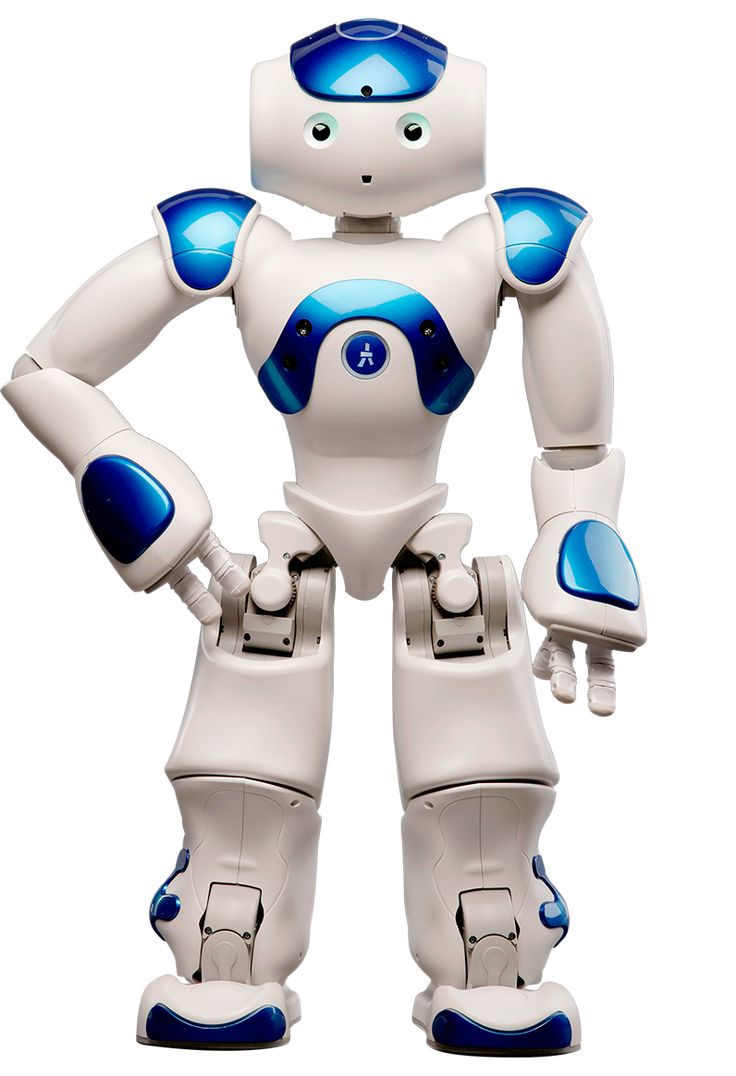
Fantasize with me for a moment: Tesla's Optimus, Unitree's H1, Figure's humanoid robot—standing at the fry station. Not as gimmicks, but as general-purpose adapters. They don't need a kitchen redesigned around them; they learn the kitchen as-is. They watch YouTube videos of line cooks. They mimic, iterate, optimize.
This isn't 2050 sci-fi. Figure AI already has robots making coffee in test kitchens. The limitation isn't mechanical—it's cognitive. Today's robots are savants: brilliant at one task, useless at adjacent ones. Tomorrow's will be interns: moderately competent at everything, quick learners, occasionally needing guidance.
The kitchen becomes a robot gymnasium, where AIs train on the world's most standardized physical tasks. McDonald's 39,000 locations become a distributed training dataset for embodied AI. The economic moat isn't the burger—it's the data exhaust from 69 million daily transactions.
The Medium-Term Future: Three Scenarios
Scenario 1: The Hybrid Harmony (Probability: 60%) Robots handle high-volume, low-variance items (fries, drinks, core burgers). Humans manage customization, quality control, customer interaction. Kitchen footprint shrinks 40%, reallocated to delivery-only "dark kitchens."
Scenario 2: The Full Autonomy (Probability: 30%) Advancements in general-purpose robotics make full automation cost-effective by 2028. A single human supervisor manages a crew of 10 robot workers. Franchise profitability doubles, triggering an arms race. The "restaurant" becomes a vending machine with a seating area.
Scenario 3: The Regulatory Fork (Probability: 10%) Public backlash against job losses triggers legislation mandating human staffing minimums. Innovation flees to jurisdictions without such rules. The US becomes a food automation laggard, the way Europe trails in AI development.
The Uncomfortable Conclusion
The question isn't "Will McDonald's automate?" It's already happening. The question is: What do we lose when we gain 27-second burgers?
We lose the McDonald's that was a first job for 1 in 8 Americans. We lose the kitchen as a socialization chamber where teenagers learn responsibility. We gain consistency, safety, speed. We gain the ability to redeploy human potential toward creative, non-repetitive work.
But here's the deeper analysis: McDonald's was never about food. It was about a promise—that in an uncertain world, you could get exactly what you expected, every time, everywhere. Automation doesn't break that promise; it fulfills it with ruthless, absolute precision.
The powdered milk moment wasn't a betrayal; it was truth-telling. The founders realized the product wasn't nourishment—it was reliability. Robots are just the final logical step.
Your Move, Robot Whisperers
This transformation won't happen in Silicon Valley boardrooms. It'll happen in 10,000 franchisee meetings where someone asks, "Can we afford not to automate?" It'll happen when a FlexPicker outlasts its third human shift manager.
This is why communities like JOBTOROB.com aren't just job boards—they're translation layers. They convert the language of legacy kitchens into the syntax of mechatronics. They help the 20-year line cook become the 22-year-old robot supervisor. They're where the McDonald's of 2025 hires its crew.
The kitchen revolution isn't coming. It's 27 seconds away.
Ready to build the future of food automation? Join 12,000+ robotics engineers, AI specialists, and industry disruptors at JOBTOROB.com—where the next generation of kitchen architects is being hired today.


